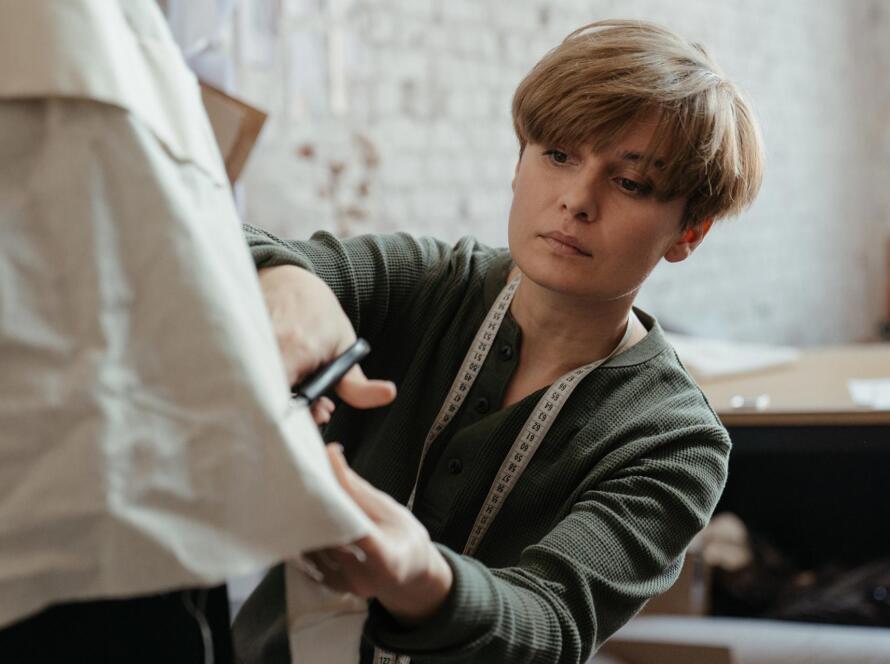

A pattern block (sometimes called a sloper) is a basic, fitted pattern made to your exact body measurements, without seam allowances, style lines, or design details. It isn’t a garment pattern you sew directly. It’s the foundation you build actual garment patterns from.
The idea is simple: getting a garment to fit well starts with getting the basic shape right: shoulder width, bust or chest point, waist position, hip curve. Once you have a block that fits you correctly, you can use it as the starting point for a huge range of garments, by adding style lines, ease, sleeves, or design details on top of that fitted foundation, instead of starting the fitting process from scratch every single time.
The usual basic blocks are: a bodice block (upper body, front and back), a skirt block, a sleeve block, and sometimes a trouser block. Most home sewers start with a bodice and skirt block, since together they cover the majority of garment types.
To use a block once you have one: trace it (never cut your original block; it’s your master copy), then add the design changes you want (more flare in a skirt, a different neckline, added ease for a looser fit) directly onto the traced copy. This process is called “pattern drafting” or “flat pattern making,” and once you’re comfortable with it, it’s genuinely faster than adjusting a commercial pattern to fit, because the fitting work is already done.
Making an accurate first block takes patience: it usually means a toile (a test garment in cheap fabric) and at least one fitting adjustment. It’s worth doing properly once rather than rushing it, since every pattern you draft afterwards inherits any fit problems in the block itself.